Solutions

One intelligence architecture. Multiple mission outcomes.

Predictive Asset Intelligence

Identify emerging equipment risks and prioritize intervention before disruption.

Multi-sensor & Multi-INT Fusion

Correlate diverse sources into a more complete and reliable operational picture.

Autonomous Systems Intelligence

Fuse onboard sensing and edge AI for resilient autonomous operations.

Legacy Data Integration

Activate existing operational data without forcing wholesale system replacement.

Operational case studies

From fragmented signals to a clearer operational picture.

Explore how Tracient brings sensor inputs and mission context together across defense and railway environments to help teams understand what is happening and respond with confidence.
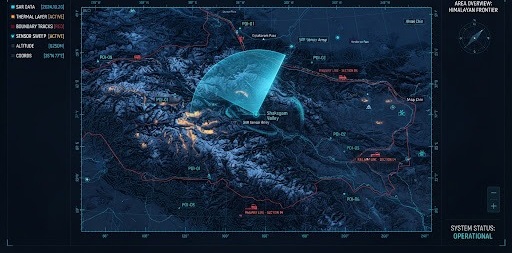
Geospatial intelligence concept visual
Concept illustration · Not customer operational imagery
01 / DEFENSE · FIRST CUSTOMER

A defense agency. A unified data foundation.

Bring fragmented observations into a shared geospatial and temporal picture. The initial customer focus is a defense agency; the organization remains unnamed.

Geospatial intelligence
Challenge
Disconnected feeds make it difficult to reconstruct events and identify changes across locations.
Sensor inputs
Satellite imagery, camera and thermal feeds, radar tracks and available geospatial records.
Approach
Normalize observations, correlate entities across time and space, and let analysts inspect the evidence behind detected changes.
Discuss this application
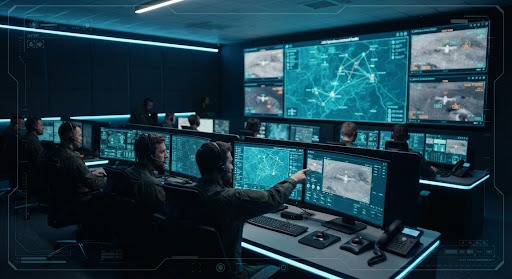
Deployment concept concept visual
Concept illustration · Not customer operational imagery
02 / DEFENSE · COMMAND & CONTROL

One operational picture. Human-led decisions.

A command-center application of the fusion platform brings sensor observations, events and asset context into one operator view.

Deployment concept
Challenge
Operators must reconcile multiple consoles, duplicated tracks and fragmented alerts.
Sensor inputs
EO/IR cameras, radar, sonar, position feeds and other mission-relevant observations.
Approach
Correlate tracks, prioritize alerts, replay events and support operator acknowledgement with an auditable evidence trail.
Discuss this application
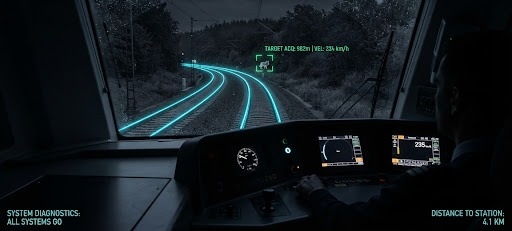
Illustrative case study 01 concept visual
Concept illustration · Not customer operational imagery
03 / RAILWAYS · CAMERA FUSION

See beyond a single camera.

Case study concept: combine visible-light and thermal views for forward-looking railway perception in changing light and visibility.

Illustrative case study 01
Challenge
Single-spectrum views can be limited by darkness, glare and environmental conditions.
Sensor inputs
One or more optical, IR and thermal camera feeds, with positioning and optional radar or LiDAR.
Approach
Align camera views, detect and track potential obstacles, and present corroborating evidence to the operator. Performance requires field validation; this is decision support, not a certified signaling system.
Discuss this application
Illustrative case study 02 concept visual
Concept illustration · Not customer operational imagery
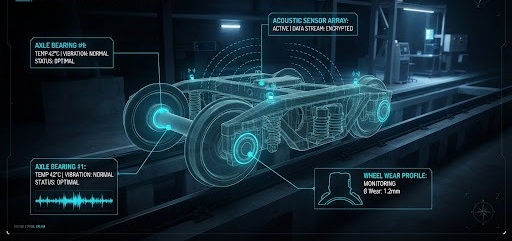
04 / RAILWAYS · SMART WAGONS

Every wagon tells a story.

Case study concept: combine condition, movement and location data to understand how freight wagons behave across an entire journey.

Illustrative case study 02
Challenge
Isolated readings hide the relationship between route conditions, wagon behavior and developing faults.
Sensor inputs
IMU, vibration, axle-bearing temperature, load, brake-state and positioning data where fitted.
Approach
Build a contextual condition history, identify unusual vibration or temperature trends, and prioritize inspection with evidence linked to the wagon and journey.
Discuss this application
Illustrative case study 03 concept visual
Concept illustration · Not customer operational imagery
05 / MANUFACTURING · PLANT FLOOR OPERATIONS

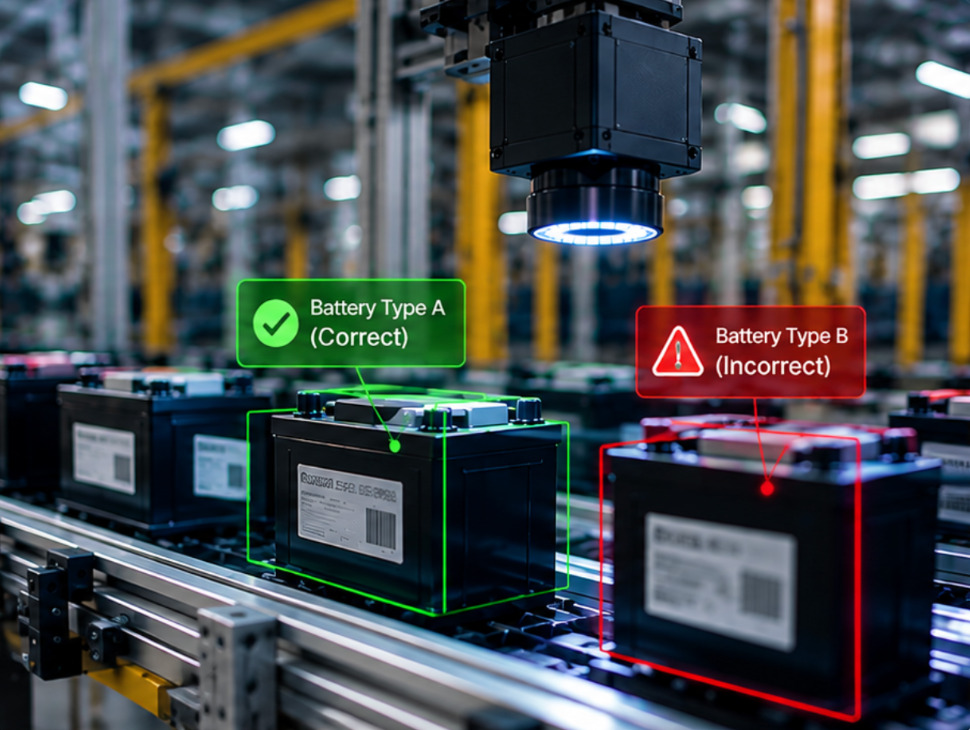
Prevent Warranty and Recall Costs with Real-Time Anomaly Detection

Case study concept: use computer vision and sensor data to detect incorrect or mislabeled batteries on the production line and prevent quality issues before they move downstream.

Illustrative case study 03
Challenge
Multiple battery models produced on the same line, with a risk of wrong or mislabeled batteries moving downstream. Manual visual inspection was time-consuming and inconsistent.
Sensor inputs
Line cameras, product labels, barcodes, and line context (position, timing, product flow), integrated with existing production line sensors and systems.
Approach
Apply computer vision to identify battery type and key visual features in real time, fuse with line context, and automatically flag and divert incorrect batteries before they move downstream.
Discuss this application

Reusable solution-page rhythm

Start with the mission. End with evidence.

Mission problem

Define the operational decision, constraint or failure mode.

Operational workflow

Map how people, systems and data move through the task today.

Tracient approach

Show where Saola, Sarvagya or Sanjaya fit—and where they do not.

Measured outcome

Measure the outcome with workload-specific evidence and caveats.

Bring us the operating problem.

We can map the problem to the Tracient architecture, identify the relevant subsystem or workflow, and define what a useful evaluation would need to prove.

Request a demo
Tracient | Decision Intelligence Platform